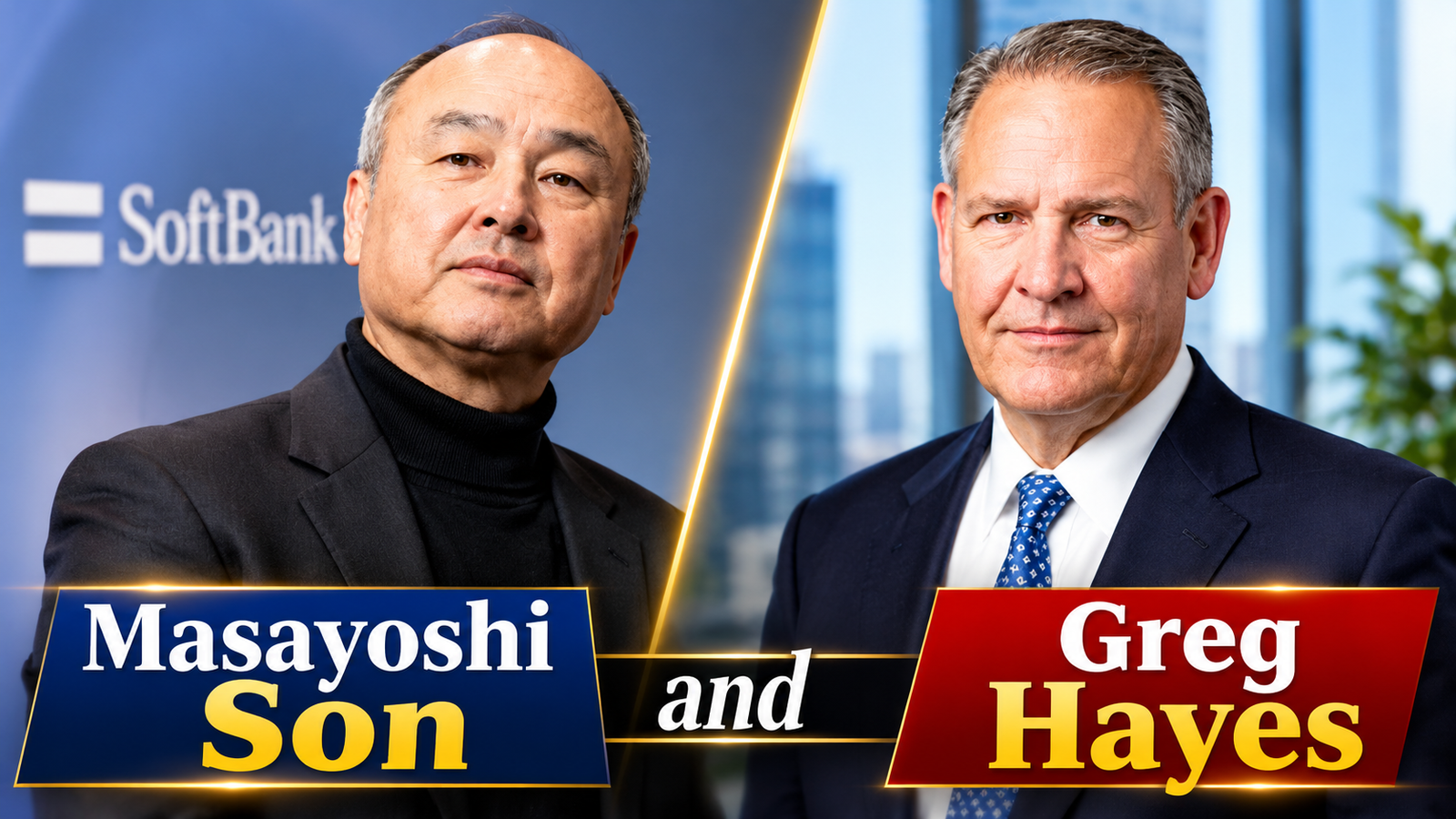
Masayoshi Son and Greg Hayes are influential business executives who built their reputations in different industries. Son is the founder and chairman of SoftBank Group, a Japanese investment and technology company. Meanwhile, Greg Hayes is an American business executive best known for leading United Technologies Corporation and RTX Corporation.
Although people search for Masayoshi Son and Greg Hayes together, there is no publicly documented direct business partnership or family relationship between them. Their professional backgrounds, however, offer an interesting comparison of two approaches to corporate leadership, investment, and business transformation.
Son focuses on technology investments, artificial intelligence, and future computing systems. In contrast, Hayes built his career around corporate finance, aerospace manufacturing, and defense technology. Understanding their individual achievements helps explain why both names attract attention in discussions about global business leadership.
Who Is Masayoshi Son?
Masayoshi Son is a Japanese entrepreneur and investor best known for founding SoftBank Group in 1981. Born on August 11, 1957, in Japan, he developed an interest in computers and technology while studying in the United States.
Son attended the University of California, Berkeley, where he studied economics. After completing his education, he returned to Japan and established a company focused on distributing computer software.
That business eventually developed into SoftBank Group, one of the most recognizable technology investment organizations in the world.
Masayoshi Son’s Early Career
Son started his entrepreneurial journey by identifying opportunities in the growing computer industry. During the early 1980s, personal computers were becoming increasingly important, creating demand for software and related services.
He recognized this opportunity and established Nihon SoftBank in September 1981. The company initially distributed packaged software before expanding into other technology markets.
Over time, SoftBank moved into internet services, telecommunications, mobile communications, and technology investments.
His early decisions helped establish the foundation for a much larger business organization.
Masayoshi Son’s Major Business Achievements
Son’s career includes several important investments and acquisitions.
- SoftBank Group: He founded the company in 1981 and continues to lead its overall strategy.
- Alibaba investment: SoftBank made an early investment in Alibaba, which became one of the most successful technology investments associated with Son.
- Arm acquisition: SoftBank acquired British semiconductor company Arm in 2016, strengthening its position in the global chip industry.
- Vision Fund: He helped establish the SoftBank Vision Fund to invest in technology companies around the world.
- Artificial intelligence: His recent strategy places strong emphasis on AI development, computing infrastructure, and advanced technology.
These achievements demonstrate his interest in identifying technologies that could influence future industries.
Who Is Greg Hayes?
Gregory J. Hayes, commonly known as Greg Hayes, is an American business executive with extensive experience in finance, aerospace, and corporate management.
He became widely recognized through his leadership of United Technologies Corporation and later RTX Corporation.
Unlike Son, whose career centers on technology investment, Hayes developed his reputation through managing large industrial organizations and overseeing major corporate changes.
His professional background includes financial management, business development, strategic planning, and aerospace operations.
Greg Hayes’s Education and Early Career
Hayes earned a bachelor’s degree in economics from Purdue University. He also became a Certified Public Accountant, giving him a strong foundation in financial management.
He joined United Technologies Corporation in 1999 through its merger with Sundstrand Corporation.
During his career at UTC, Hayes held several senior positions. These included financial and strategic leadership responsibilities.
In 2008, he became the company’s chief financial officer. Later, in 2014, he became CEO. He also took over as chairman in 2016.
His experience in finance and corporate operations helped prepare him for larger leadership responsibilities.
Greg Hayes’s Major Business Achievements
Hayes played an important role in transforming United Technologies and establishing RTX.
His major professional achievements include:
- United Technologies: He became CEO in 2014 and helped reshape the company’s business structure.
- Rockwell Collins acquisition: UTC acquired Rockwell Collins in 2018, strengthening its aerospace operations.
- Business restructuring: The company separated Otis and Carrier into independent publicly traded businesses in 2020.
- RTX formation: Hayes helped lead the combination of United Technologies’ aerospace businesses with Raytheon Company in 2020.
- Corporate leadership: He guided the newly formed aerospace and defense company through its early development.
These decisions established Hayes as an important figure in the aerospace and defense industry.
Masayoshi Son and Greg Hayes: Is There a Business Connection?
One of the most interesting questions about Masayoshi Son and Greg Hayes concerns their professional relationship.
Despite their influence in international business, available corporate biographies and company records do not establish a direct partnership between them.
There is no verified public announcement showing that they jointly founded a company, managed a shared investment, or served together on the same corporate board.
Their careers developed through separate organizations.
Masayoshi Son is associated with SoftBank Group, Arm, and technology investments. Greg Hayes built his career through United Technologies, RTX, and other corporate leadership positions.
However, the absence of a documented partnership does not prove that the two executives have never met or communicated privately.
Why Are Their Names Discussed Together?
There are several reasons their names can appear together in business discussions.
First, both executives have managed large multinational organizations. Their decisions have influenced employees, investors, customers, and entire industries.
Second, both have participated in major corporate transactions. Son became known for technology investments and acquisitions, while Hayes led significant aerospace restructuring and mergers.
Finally, their careers demonstrate how leadership can shape industries during periods of technological change.
Therefore, comparing their achievements makes sense. However, it is important not to confuse a professional comparison with evidence of a personal or business relationship.
Masayoshi Son vs. Greg Hayes: Key Differences
Although both men have held senior leadership positions, their professional responsibilities and business strategies differ considerably.
| Category | Masayoshi Son | Greg Hayes |
|---|---|---|
| Nationality | Japanese | American |
| Main company | SoftBank Group | United Technologies and RTX |
| Industry | Technology and investment | Aerospace and defense |
| Education | University of California, Berkeley | Purdue University |
| Career background | Entrepreneur and investor | Accountant and corporate executive |
| Major achievement | Building SoftBank and major technology investments | Helping establish RTX |
| Business focus | AI, semiconductors, and technology | Aerospace, engineering, and defense |
| Leadership approach | Long-term technology investment | Corporate restructuring and operations |
| Known role | Founder and CEO | Former CEO and chairman of RTX |
The comparison highlights their different strengths.
Son has concentrated on identifying future technology opportunities. Hayes focused on managing established industrial businesses and improving their long-term structure.
Neither approach is automatically better. Their effectiveness depends on the industries, risks, and business goals involved.
Masayoshi Son’s Focus on Artificial Intelligence
Artificial intelligence has become a central part of SoftBank’s business strategy.
Son believes AI will transform industries such as healthcare, manufacturing, transportation, communication, and computing.
His company has therefore increased its investments in businesses and infrastructure connected to advanced AI systems.
SoftBank’s Investment in OpenAI
One of SoftBank’s major recent developments involves its investment in OpenAI.
On February 27, 2026, SoftBank announced a planned additional investment of $30 billion through SoftBank Vision Fund 2.
The company completed the three investment tranches by October 1, 2026. Following those investments, SoftBank reported cumulative OpenAI investments of $64.6 billion and an ownership interest of approximately 13%.
These figures come from SoftBank’s corporate announcements.
The investment reflects Son’s ambition to expand SoftBank’s position in artificial intelligence and support the development of advanced computing technologies.
However, large investments also carry financial risks. Their eventual returns depend on company performance, market conditions, competition, and future technological developments.
Why Arm Matters to Son’s Strategy
Arm is another important part of SoftBank’s technology strategy.
The company designs semiconductor architectures used in many smartphones, computers, and other electronic devices.
Arm’s technology has become increasingly relevant as demand grows for efficient computing systems.
For Son, the semiconductor industry offers opportunities connected to AI, cloud computing, robotics, and data centers.
This strategy shows how SoftBank aims to participate in several layers of the technology industry rather than relying on one business sector.
Greg Hayes and the Transformation of RTX
Greg Hayes made his most significant corporate contribution through the development of RTX.
In 2020, United Technologies combined its aerospace businesses with Raytheon Company. The transaction created Raytheon Technologies, which later adopted the RTX name.
The company brought together three major business areas:
- Collins Aerospace: Develops aircraft systems, avionics, and aerospace technologies.
- Pratt & Whitney: Produces aircraft engines and related propulsion systems.
- Raytheon: Develops defense systems, missiles, sensors, and other advanced technologies.
This combination created a major organization serving commercial aviation and defense customers.
Greg Hayes’s Leadership Transition
Hayes served as RTX’s president and CEO following the 2020 merger.
In May 2024, Christopher Calio succeeded him as president and CEO. Hayes then continued as executive chairman.
In February 2025, RTX announced that Hayes would step down as executive chairman and leave the board effective April 30, 2025.
He subsequently served as a special adviser to the RTX CEO through January 2, 2026.
Therefore, Hayes should not be described as RTX’s current CEO or chairman.
What Does Greg Hayes Do Now?
His corporate responsibilities have continued beyond RTX.
As of November 2026, publicly available corporate information identifies Hayes as a director of Becton, Dickinson and Company and lead independent director of Phillips 66.
These positions allow him to contribute his experience in corporate governance, financial oversight, strategic planning, and executive leadership.
His transition from a major operating role to corporate board positions represents a different stage of his business career.
What Can Business Leaders Learn From Son and Hayes?
The careers of Masayoshi Son and Greg Hayes offer useful lessons about managing large organizations.
Although they worked in different industries, their experiences highlight several important leadership principles.
1. Recognize Long-Term Opportunities
Son’s early interest in computers helped him identify opportunities before the technology industry reached its current size.
His investments in internet companies, semiconductors, and AI demonstrate the value of thinking beyond immediate market conditions.
2. Understand Financial Management
Hayes built his career through financial and operational responsibilities.
His experience as a CFO and CEO demonstrates why strong financial management matters when companies make acquisitions or restructure their operations.
3. Adapt to Industry Changes
Both executives worked in industries that experienced major technological developments.
Son shifted SoftBank’s focus as the technology market evolved. Meanwhile, Hayes helped transform UTC into a more focused aerospace organization.
4. Balance Opportunity With Risk
Large investments and corporate mergers can create opportunities for growth. However, they also introduce financial, operational, and strategic risks.
Their careers show why executives must consider both potential rewards and possible setbacks.
Conclusion
Masayoshi Son and Greg Hayes are influential business leaders whose careers developed through different industries and corporate strategies.
Son established SoftBank Group and became a major figure in technology investment, artificial intelligence, and semiconductor development. Hayes, meanwhile, built his reputation through United Technologies and his leadership in forming RTX.
Although their names appear together in business discussions, there is no publicly documented direct business partnership or family relationship between them.
Their careers are better understood as two separate examples of global business leadership. Comparing their achievements provides insight into technology investment, corporate restructuring, financial management, and long-term strategic planning.
FAQs
1. Are Masayoshi Son and Greg Hayes related?
There is no credible public evidence establishing a family relationship between Masayoshi Son and Greg Hayes. They have different nationalities, backgrounds, and professional histories.
2. Have Masayoshi Son and Greg Hayes worked together?
No publicly documented business partnership or shared corporate leadership role has been established. Son is associated with SoftBank, while Hayes built his career through United Technologies and RTX.
3. Who is Masayoshi Son?
Masayoshi Son is a Japanese entrepreneur who founded SoftBank Group in 1981. He is known for major technology investments, including Alibaba, Arm, and OpenAI.
4. Who is Greg Hayes?
Greg Hayes is an American business executive and former CEO of United Technologies and RTX. He played an important role in the 2020 merger that created RTX.
5. What is Masayoshi Son doing in 2026?
Son continues to lead SoftBank Group as chairman and CEO. His current strategy emphasizes artificial intelligence, semiconductor technology, and large-scale computing infrastructure.
6. What is Greg Hayes doing now?
Hayes serves in corporate board positions, including director of Becton, Dickinson and Company and lead independent director of Phillips 66. His advisory period with RTX ended in January 2026.