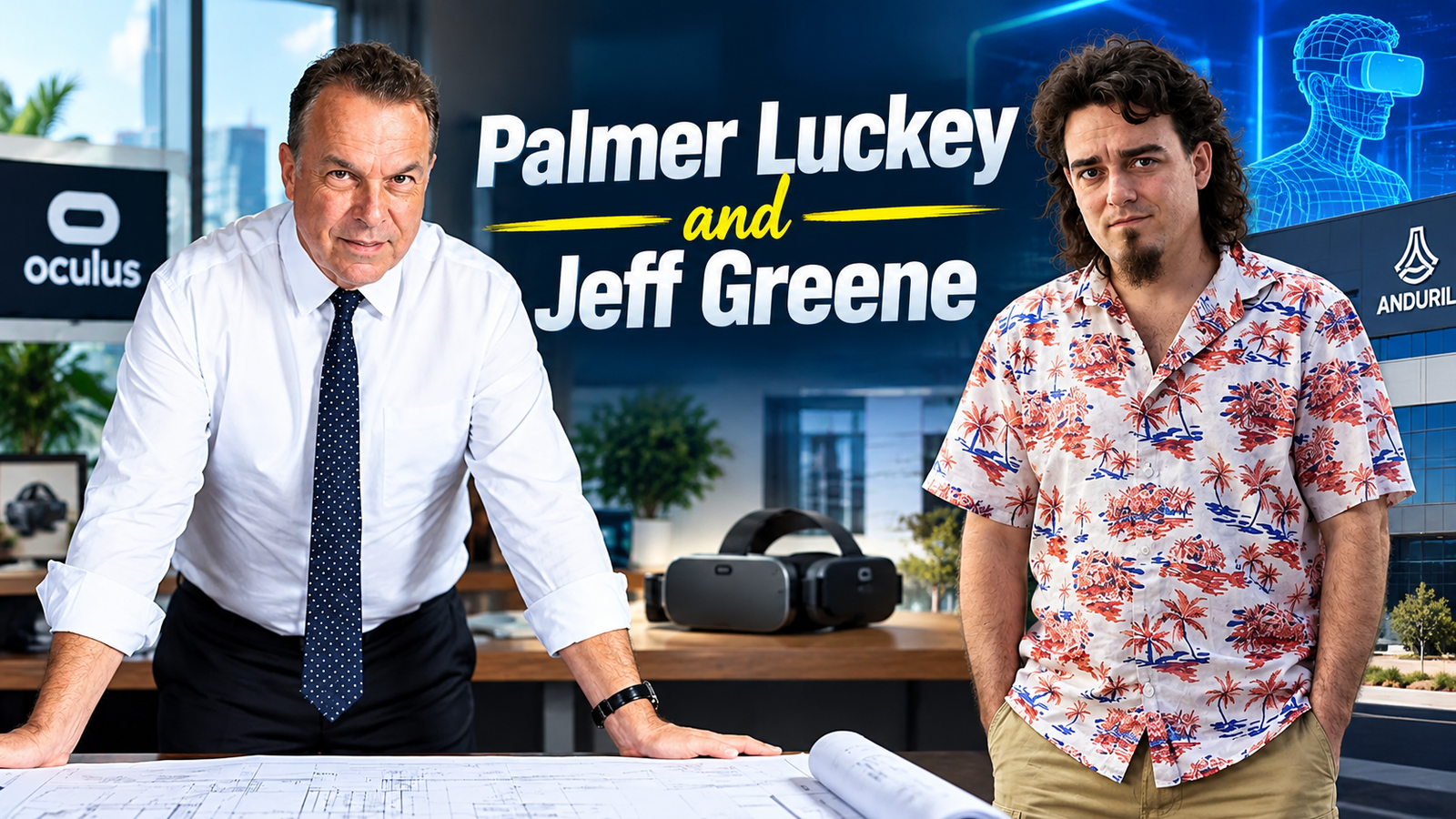
Luckey’s financial success began with virtual reality and expanded into defense technology. His career demonstrates how an early product can lead to a much larger business opportunity.
Oculus VR and the Facebook Acquisition
Luckey developed the Oculus Rift, a virtual reality headset designed to deliver immersive digital experiences. He founded Oculus VR in 2012 and attracted significant interest from investors and technology enthusiasts.
Facebook acquired Oculus in 2014. The transaction helped establish Luckey as a major technology entrepreneur while giving Facebook a foothold in the growing virtual reality market.
However, the acquisition’s headline value does not equal Luckey’s personal proceeds. A founder’s actual payout depends on ownership, investor shares, transaction terms, and other financial arrangements.
Founding Anduril Industries
In 2017, Luckey founded Anduril Industries with other technology entrepreneurs. The company aims to modernize defense systems through software, automation, sensors, and advanced hardware.
Its work includes technologies designed to help military and security organizations detect, track, and respond to potential threats. Anduril combines software development with physical systems, making it different from a conventional consumer technology company.
In May 2026, Forbes reported that private investors valued Anduril at approximately $61 billion following a funding round. That valuation reflects the company’s estimated overall value, not Luckey’s personal wealth.
His ownership stake gives him exposure to the company’s future performance. Nevertheless, private-company shares can be difficult to sell, and their estimated value can change as new funding rounds or business results emerge.
What Makes Luckey’s Business Approach Different?
Luckey’s career involves creating products and building companies around emerging technology.
His approach relies on several factors:
- Developing new products that solve specific technical problems.
- Attracting investors and skilled engineering teams.
- Finding customers willing to pay for advanced systems.
- Expanding production and delivery as demand grows.
- Maintaining innovation while managing business costs.
These factors create opportunities, but they also involve considerable risk. Technology companies must continually improve their products and respond to competitors, changing customer needs, and regulatory requirements.
How Jeff Greene Built His Fortune
Greene followed a different route. Rather than creating a major consumer technology product, he accumulated property and used financial investments to build wealth over several decades.
Early Real Estate Investments
Greene began investing in real estate while attending Harvard Business School. He bought a multifamily property and rented out additional units, helping cover the costs of ownership.
This approach introduced him to a central principle of property investing: an asset can generate rental income while potentially increasing in value over time.
He later expanded into larger residential and commercial properties. His portfolio grew as he identified opportunities in different real estate markets.
However, property investing requires more than purchasing buildings. Investors must manage financing, maintenance, vacancies, taxes, insurance, and market fluctuations.
Greene’s experience also included periods of difficulty. Real estate markets can decline sharply, creating financial pressure for investors with substantial borrowing.
The Subprime Mortgage Market Bet
One of Greene’s best-known financial achievements involved the U.S. housing market before the 2008 financial crisis.
In the years before the crash, many lenders issued mortgages to borrowers who presented greater repayment risks. Financial institutions bundled mortgages into securities, which investors purchased based on expected payments.
Greene believed the housing market faced serious risks. He purchased credit default swaps tied to subprime mortgage-backed securities, allowing him to benefit when the underlying debt deteriorated.
As the housing market collapsed, those positions generated substantial profits. Forbes has reported that the trade earned Greene approximately $800 million.
This outcome helped transform him into a billionaire and gave him additional capital for property investments.
Nevertheless, the strategy carried significant risk. Credit default swaps can produce large losses if the market moves against an investor or if the timing proves incorrect. Greene’s success should not be interpreted as proof that similar trades will reliably produce profits.
Greene’s Real Estate and Philanthropic Interests
Greene continued to invest in properties and other financial assets after the crisis. His interests include residential and commercial real estate, along with additional investments.
He has also supported education through philanthropic work. Greene and his wife, Mei Sze Greene, founded The Greene School in West Palm Beach, Florida.
His charitable activities demonstrate another aspect of his public profile beyond investing. However, the precise value of his current charitable contributions and individual assets can change over time.
Palmer Luckey vs. Jeff Greene: Key Differences
Although both entrepreneurs have achieved billionaire status, their careers depend on different sources of value.
| Category | Palmer Luckey | Jeff Greene |
|---|---|---|
| Primary industry | Technology and defense | Real estate and finance |
| Main wealth driver | Company ownership | Property and investments |
| Major achievement | Oculus VR and Anduril | Real estate growth and mortgage-market trade |
| Investment exposure | Private technology valuations | Property prices and financial markets |
| Business model | Develop and sell technology | Acquire, manage, and invest in assets |
| Philanthropic connection | Public profile centers mainly on technology and defense | Education and charitable initiatives |
Luckey’s wealth depends significantly on whether his technology businesses continue to grow and attract customers. Greene’s portfolio depends on property values, investment performance, and broader financial conditions.
Neither model guarantees success. Technology companies can struggle to turn innovation into sustainable profits, while property investors can face falling prices, higher borrowing costs, and reduced rental demand.
The comparison shows that wealth creation can follow different routes. It also highlights the importance of risk management, business execution, and long-term decision-making.
Are Palmer Luckey and Jeff Greene Related?
There is no widely documented evidence that Palmer Luckey and Jeff Greene are relatives. Likewise, publicly available information does not establish a direct business partnership between them.
Their names may appear together because both are wealthy American entrepreneurs whose careers attract interest from readers researching billionaire business figures.
Their professional backgrounds are distinct. Luckey is known for virtual reality and defense technology, whereas Greene is known for property investment and financial-market strategies.
It is important not to confuse an online comparison with a personal connection. Unless reliable reporting or direct statements establish a relationship, claims that the two are family members, partners, or co-investors should be treated as unverified.
What Their Careers Teach About Building Wealth
The careers of Luckey and Greene offer useful lessons, although neither person’s experience guarantees similar results for others.
1. Build Knowledge Before Taking Major Risks
Luckey developed technical skills through years of experimentation. Greene learned about property investment through early purchases and later experience in financial markets.
Both careers demonstrate the value of understanding an industry before committing substantial resources.
2. Recognize Opportunities Without Ignoring Risk
Luckey identified an opportunity in virtual reality before the market reached a wider audience. Greene recognized weaknesses in the housing market before the financial crisis.
However, successful outcomes depend on timing, execution, and the ability to withstand losses. Recognizing a possible opportunity does not ensure that it will succeed.
3. Understand the Difference Between Revenue and Wealth
A company’s valuation does not equal its founder’s personal net worth. Similarly, owning valuable property does not mean an investor can immediately access its full market value in cash.
Debt, taxes, ownership percentages, operating expenses, and liquidity all affect the actual financial picture.
4. Adapt as Markets Change
Luckey moved from consumer virtual reality into defense technology. Greene expanded from residential property into a broader portfolio of investments.
Their careers show how business interests can evolve as new opportunities appear. However, diversification works best when investors understand the risks and costs associated with each new venture.
Conclusion
Palmer Luckey and Jeff Greene are successful American entrepreneurs who built their fortunes through different industries. Luckey became known for Oculus VR and later founded Anduril Industries, while Greene accumulated wealth through real estate and a major investment against subprime mortgage debt.
Forbes estimated Luckey’s net worth at $5.9 billion on October 22, 2026, and Greene’s at $10.1 billion on October 26, 2026. These figures are estimates and can change as company valuations and investments fluctuate.
There is no widely documented family relationship or direct business partnership between them. Their shared significance lies in their contrasting approaches to business, investment, and wealth creation.
Ultimately, their careers show that there is no single path to financial success. Technology entrepreneurship and real estate investing both offer opportunities, but each requires expertise, patience, careful risk assessment, and sound decision-making.
FAQs
1. Who are Palmer Luckey and Jeff Greene?
Palmer Luckey is an inventor and entrepreneur known for founding Oculus VR and Anduril Industries. Jeff Greene is a real estate investor known for building wealth through property investments and financial strategies.
2. Are Palmer Luckey and Jeff Greene related?
There is no widely documented evidence that they are relatives. Their names appear together in online comparisons because both are wealthy American entrepreneurs with different professional backgrounds.
3. What is Palmer Luckey’s net worth in 2026?
Forbes estimated Palmer Luckey’s net worth at $5.9 billion on October 22, 2026. The estimate reflects his technology-related wealth, including his interest in Anduril Industries, and may change over time.
4. What is Jeff Greene’s net worth in 2026?
Forbes estimated Jeff Greene’s net worth at $10.1 billion on October 26, 2026. His wealth primarily comes from real estate and investments. This figure is an estimate rather than an audited financial statement.
5. How did Palmer Luckey make his money?
Luckey founded Oculus VR, which Facebook acquired in 2014 in a transaction valued at approximately $2 billion to $2.3 billion. He later founded Anduril Industries, which develops defense technology.
6. How did Jeff Greene become a billionaire?
Greene built wealth through real estate investments and financial-market strategies. One of his most notable successes came from taking positions against subprime mortgage-backed securities before the 2008 financial crisis.